

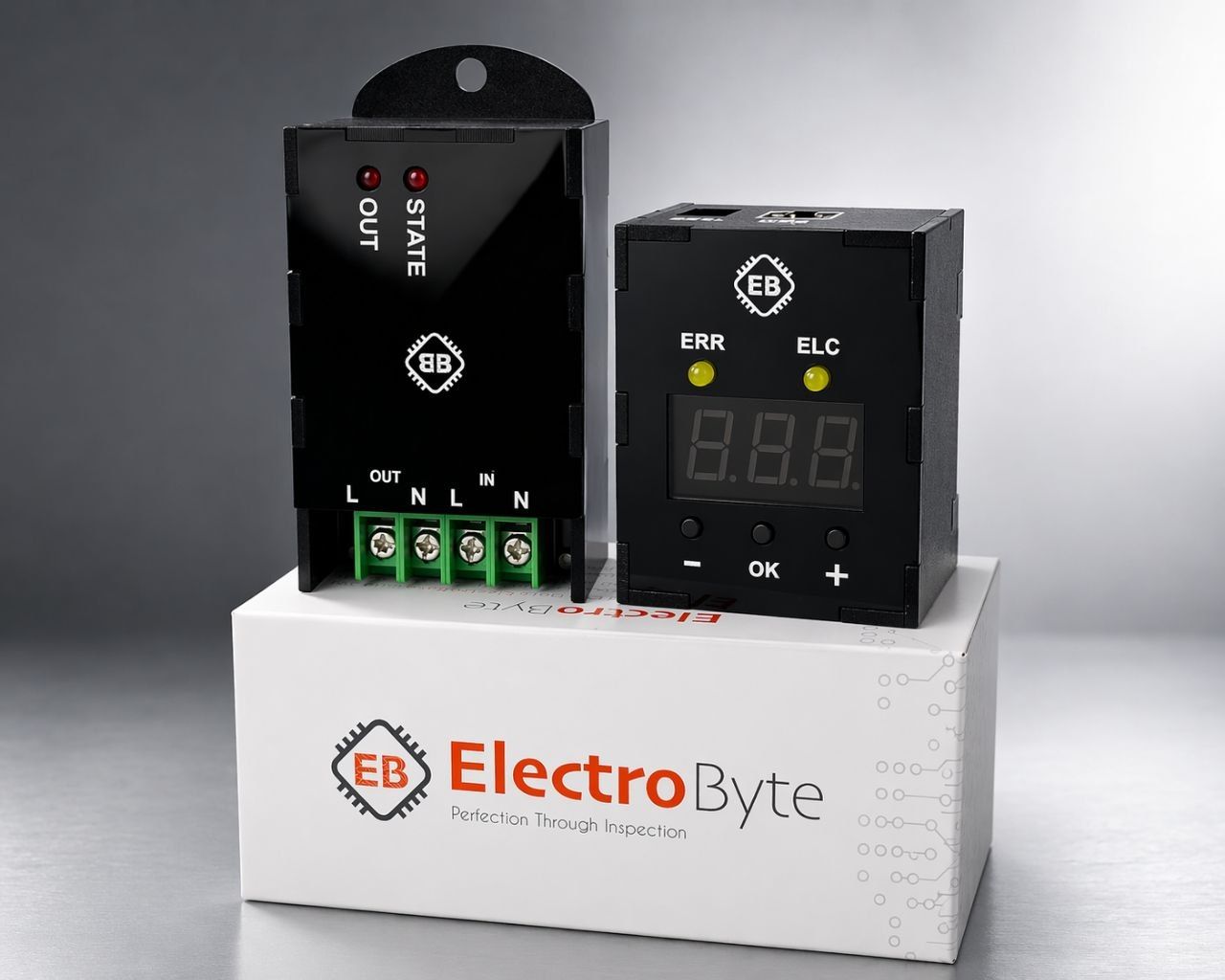
Smart Load Management Circuit for Renewable Energy Resources (Unitron)
The amount of energy produced by Distributed Energy Resources (DERs), such as solar and wind, varies depending on climate, daylight hours, and other factors. However, electrical loads are typically constant, which creates a challenge. At times, excess power is generated (more than required), leading to energy wastage. On average, about 25% of generated energy may be wasted. At other times, the generated power is insufficient to meet demand. In such cases, the system’s battery can compensate, but its capacity is limited. Therefore, during low-generation conditions (e.g., cloudy weather), it may be necessary to disconnect non-essential loads. Interruptible loads include appliances such as heaters or other non-critical devices. At ElectroByte, we have developed management circuits to improve system efficiency, particularly for solar systems where each apartment has its own unit. Our approach involves monitoring both generated and consumed energy via the RS232 protocol from the inverter. When generated power exceeds consumption, the excess energy is redirected to a resistive load (e.g., a water heater). The delivered power is dynamically adjusted according to load conditions: when load demand increases, the supplied power decreases, and vice versa. In cases where generated energy is lower than the required load, the battery is used for compensation. However, since battery capacity is limited, preserving battery life is essential. To address this, we designed the Unitron transmitter circuit, which is installed at the inverter. It communicates via RS232, interprets system data, and sends ON/OFF control signals to the Unitron receiver circuit connected to secondary loads. The Unitron transmitter can control up to four receivers simultaneously. The ON and OFF commands follow configurable settings defined at the transmitter, enabling efficient load management and improving overall system performance.